What Is Rising Damp?
Rising damp is a form of structural dampness caused by groundwater travelling upwards through porous building materials — typically masonry, brick, and mortar. This happens through a process called capillary action, where water is drawn up through tiny pores and channels in the wall, much like a sponge absorbing water.
Under normal circumstances, a damp proof course (DPC) — a horizontal barrier built into the base of every wall — prevents this moisture from rising. However, in older properties this layer may be absent, degraded, or bridged by raised soil or render levels, allowing moisture to travel freely up the wall.
Did You Know?
Rising damp is most common in properties built before 1920, when lead or slate DPC materials were used and have since deteriorated. Modern buildings use impermeable plastic DPCs that don't degrade, but can still be bridged by external render, soil, or debris.
Signs of Rising Damp
Rising damp has several distinctive signs that distinguish it from other types of moisture problems. The pattern of damage is quite specific because the water always travels upward from ground level:
Tide-Mark Staining
A horizontal stain on the lower 0.5–1m of the wall, often yellow-brown in colour, showing the highest point the moisture reached.
White Salt Deposits
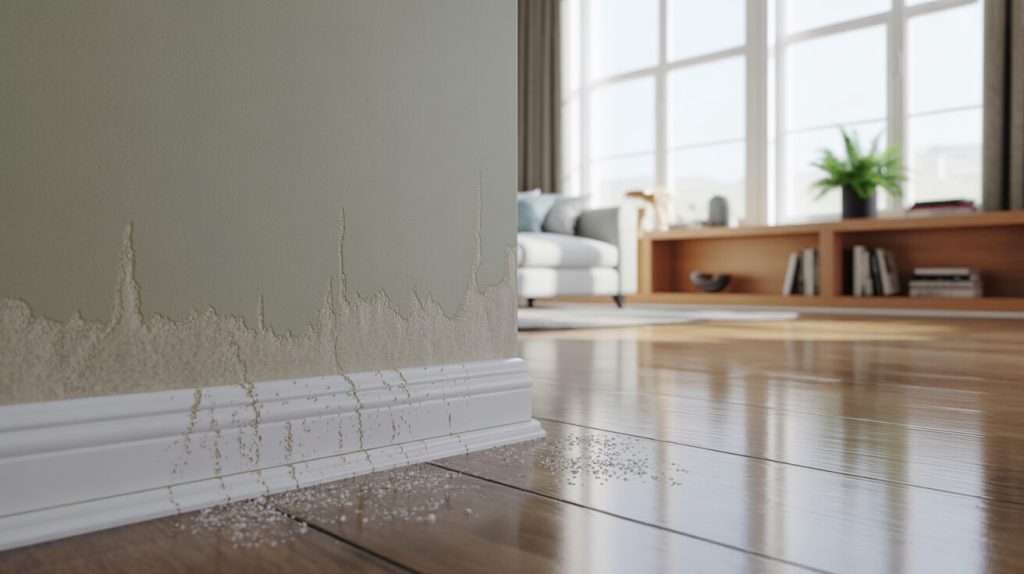
Fluffy white crystalline deposits on the wall surface — salts left behind as water evaporates. A strong indicator of rising moisture.
Peeling Wallpaper & Paint
Wallpaper bubbling or lifting at the skirting board, and paint blistering at low level. Often the first visible sign homeowners notice.
Crumbling Plaster
Plaster at low level becomes soft, powdery, or falls away entirely — especially behind skirting boards.
Damp, Musty Smell
A persistent earthy or musty smell in rooms — especially noticeable in winter or after rainfall when conditions drive more moisture upward.
Rotting Skirting Boards
Timber skirting boards in contact with damp masonry can begin to decay — a warning sign of long-standing moisture problems.
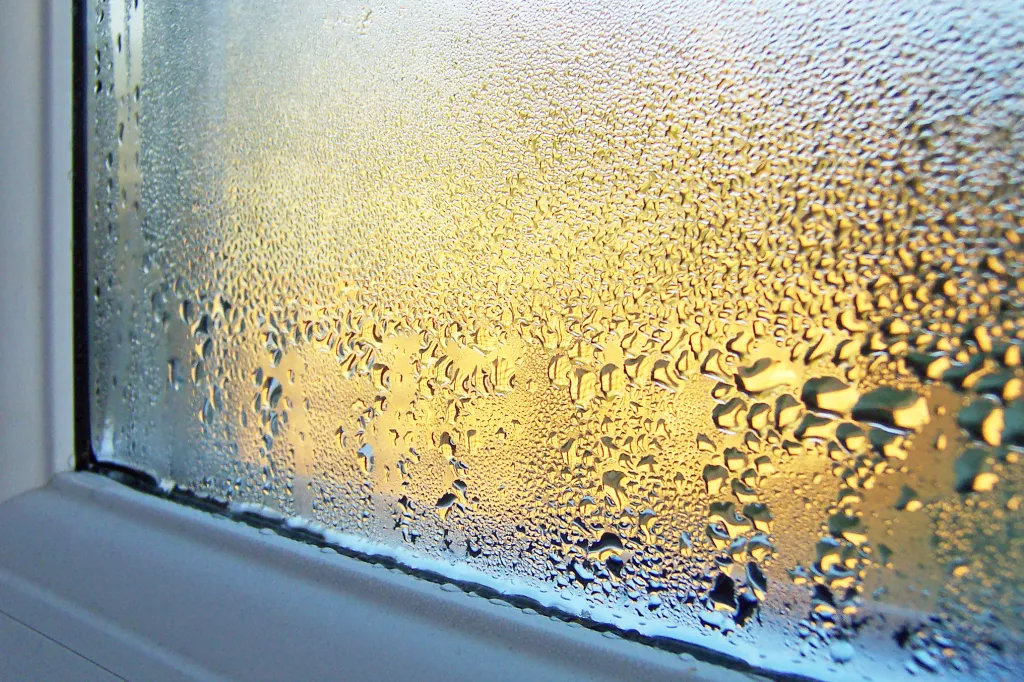
Don't Confuse with Condensation
Rising damp is frequently misdiagnosed. Condensation and penetrating damp can produce similar visual symptoms. Only a calibrated moisture meter survey, combined with a trained surveyor's assessment, can confirm rising damp. Be cautious of any contractor who diagnoses rising damp without conducting a proper survey — incorrect treatment is expensive and won't solve the problem.
What Causes Rising Damp?
Understanding the cause is essential — it determines what remedial work will actually fix the problem. The most common causes we identify during surveys include:
- Failed or absent DPC: In properties built before the early 1900s, no DPC was installed. In others, the original lead or slate DPC has deteriorated over time.
- Bridged DPC: Even a perfectly intact DPC can be bypassed if external render, paving, or soil has been raised above it — allowing water to cross the barrier.
- Defective DPC: Physical gaps in a DPC — caused by settlement, movement, or poor installation — allow moisture to bypass the barrier at specific points.
- High ground levels: Where the external ground level sits above the internal floor level, hydrostatic pressure drives moisture through the wall regardless of the DPC.
How We Diagnose Rising Damp
Accurate diagnosis is the most important step — and it's where many cheaper surveys fail homeowners. Our RICS-qualified surveyors follow a rigorous process:
Initial Assessment
We inspect the internal and external property, looking at wall heights, ground levels, render levels, drainage, and any obvious DPC bridging that might explain moisture entry.
Calibrated Moisture Meter Survey
We use a professional-grade calibrated moisture meter to map moisture readings across the affected wall at multiple heights. This distinguishes true rising damp (readings high at low level, diminishing higher up) from penetrating damp or condensation.
Salt Analysis
We test for hygroscopic salts — the mineral deposits left by rising groundwater. Their presence confirms that moisture is travelling through the masonry from below, not from another source.
Written Report
You receive a clear written report with our findings, photographs, the confirmed diagnosis, and clear recommendations for what remedial works are required. No jargon — just honest, actionable information.
What Our Report Covers
Our rising damp survey report gives you everything you need to understand the problem and commission the right contractor to fix it:
- Confirmation of whether rising damp is genuinely present (many suspected cases turn out to be condensation or penetrating damp)
- The likely cause — failed DPC, bridged DPC, absent DPC, or high external ground levels
- Moisture meter readings mapped across the affected wall at multiple heights
- Salt analysis results confirming groundwater involvement
- Photographic evidence of all affected areas
- Clear specification of the remedial works required, including the standard expected (BS 6576 for chemical DPC installation)
- Guidance on what to look for when obtaining quotes from remedial contractors
Why an Independent Survey Protects You
Many damp proofing contractors offer "free" surveys — but they profit from the works they recommend. An independent survey from a company that carries out no works means you get an unbiased diagnosis. You can then use our report to obtain competitive quotes from contractors, knowing the specification is correct.
What Remedial Works Are Typically Required?
Once our survey confirms rising damp, the remedial contractor you appoint would typically carry out the following works (which we specify in detail in our report):
Chemical Damp Proof Course Injection
A water-repellent cream or fluid is injected into holes drilled at low level in the affected wall. The chemical disperses through the masonry, creating an impermeable barrier that stops capillary action — as effective as a physical barrier without the need to remove masonry.
Plaster Removal & Salt-Resistant Re-plastering
The existing plaster must be removed and replaced — it will be contaminated with hygroscopic salts that continue to attract moisture even after the DPC is installed. Specialist renovation plaster is used to neutralise residual salts and allow the wall to breathe.
External Bridging Correction
Where ground levels, render, or paving are bridging the DPC, these must be addressed — otherwise the new DPC will simply be bypassed again. Our report identifies any bridging that needs resolving.